Our verdict on Digestsync
What we liked
- The full ingredient list is printed on the vendor's label image
- A single jar costs $69 as a one-time payment, no autoship
- Free US shipping on every package
- 60-day refund counted from delivery, and empty jars are accepted
Watch out for
- The 2.4 g proprietary blend hides every individual dose
- The label lists "Sukre", which the vendor never explains
- The vagus nerve and weight-loss claims have no product study behind them
- The vendor FAQ describes the facility as approved by the FDA, while the label says FDA registered
- A refund means mailing every jar back at your own cost
- The vendor tells buyers to try it 3 months, longer than the 60-day window
TonicNest may earn a commission if you buy through links on this page, at no extra cost to you. That does not change what we report.
Digestsync is a fiber-style drink powder, sold with a vagus nerve story, whose label shows a 2.4 g proprietary blend of five ingredients in a 3 g scoop.[1] No amount is printed for any single ingredient, so you cannot compare a scoop with the doses used in research. We found no study of the finished product. A jar costs $69 (checked October 19, 2026), with a 60-day refund counted from delivery.[3]
What is Digestsync and what does the vendor claim?
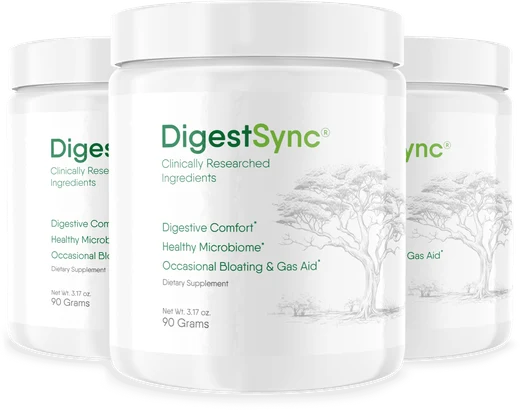
Each jar holds 30 servings, or 90 g (3.17 oz). One serving is one 3 g scoop mixed into 8 to 16 oz of liquid.[1] The vendor sells it through the retailer BuyGoods, and the label says it is "Assembled in the USA" and distributed from Largo, Florida.[1] The sales page also carries weight-loss testimonials, one claiming 20 lb lost "without even changing my diet", next to a disclaimer that results "may not reflect the typical purchaser's experience".[2]
Digestsync facts at a glance
Digestsync is a once-a-day fiber-style powder with undisclosed doses, priced from $69 to $294 and sold only through BuyGoods. Each row below comes from the vendor's own pages, read October 19 and checked October 19, 2026.
| Item | What we found |
|---|---|
| What it is | Drink powder sold for gut and bowel support[1] |
| Form and size | Powder jar, 30 servings, 90 g (3.17 oz)[1] |
| Serving | 1 scoop (3 g) in 8 to 16 oz of liquid, once a day[1] |
| Doses disclosed | No. One 2.4 g proprietary blend[1] |
| Price | $69 to $294 per package, checked October 19, 2026[4] |
| Refund window | 60 days from delivery[3] |
| Seller | BuyGoods, for DigestSync of Largo, FL[3] |
| Not sold on | Amazon or other sites, per the vendor[2] |
Who might consider Digestsync, and who should not?
Digestsync may suit a healthy adult who wants a small daily fiber-style drink and accepts that the doses are hidden. It is not a substitute for a medical check of ongoing gut symptoms. The label itself tells three groups to ask a doctor first: pregnant or nursing women, anyone under 18, and anyone with a medical condition.[1]
The vendor FAQ contradicts that label. It says the product is "designed for all ages and medical conditions".[2] We follow the label, because it is the text that ships with the jar.
See a doctor right away, before trying any supplement, if you have:
- Blood in your stool or black, tarry stools
- Weight loss you cannot explain
- Severe or constant belly pain
- Vomiting, or no bowel movement with a swollen belly
- A lasting change in bowel habits, especially after age 45
- Trouble swallowing
How does Digestsync claim to work?
The vendor says Digestsync works through a "belly nerve", meaning the vagus nerve, and that it "gets straight to the root cause of gut problems and fixes them for good".[2] No study of the product tests that idea, and the label names no ingredient for the nerve.
What the label does show is a set of fermentable fibers and starches. Konjac glucomannan, pea starch and baobab are all sources of fiber or resistant starch. Fiber can add bulk and feed gut bacteria, which is a plain, well-known mechanism. Whether 2.4 g of a blend split five ways does anything is unknown, because the split is not printed. We walk through each step of the evidence in our check of whether Digestsync works.
What ingredients are in Digestsync?
Digestsync contains a 2.4 g proprietary blend of pea starch, wildcrafted baobab, Sukre, konjac glucomannan and biogenic polyamines, plus silicon dioxide, natural flavors and stevia.[1] No single amount is listed. In the research we read, the useful doses run from about 2 g to 15 g or more of one ingredient, so the whole blend sits below most of them.
| Ingredient | Dose disclosed | Doses studied | What studies found | Evidence grade |
|---|---|---|---|---|
| Pea starch | No | Resistant starch: clearer effects above 20 to 28 g/day | No trial of pea starch itself. Resistant starch as a class gave small drops in total and LDL cholesterol[14] | Weak |
| Wildcrafted baobab | No | 15 g in one serving | 15 g lowered self-rated hunger but not calories eaten, n=20, one day[11] | Weak |
| Sukre (purified L-arabinose) | No | 7.5 g with 50 g of sugar | Blunted the blood sugar spike only when taken with table sugar, n=12[12] | Weak |
| Konjac glucomannan | No (below 2.4 g) | About 3 g/day | Weight: no significant change across 8 trials[8]. LDL down about 10%[9] | Moderate (LDL), Weak (weight) |
| Biogenic polyamines | No, type not stated | 0.9 to 1.2 mg/day spermidine | 12-month trial, n=100: no effect on memory or biomarkers; no gut or weight trials[13] | Weak |
| Silicon dioxide, natural flavors, stevia | No | Not researched | Anti-caking agent, flavor and sweetener | Not graded |
Sukre is a brand name for purified L-arabinose, a sugar that slows how fast table sugar is absorbed. The vendor never explains it. The trials used it mixed with sugar, while Digestsync is taken in water before breakfast.[12]
A copycat site shows a different label without Sukre and with an FDA badge. Trust the label on the jar you receive. Each ingredient gets its own card in our Digestsync ingredients breakdown.
Does Digestsync work for gut health?
No published study has tested Digestsync itself, so nobody can say it works for gut health. The evidence stops at single ingredients, mostly at doses you cannot confirm the jar contains. Here is the ladder we use, from weakest to strongest proof.
- Plausibility. Fiber and resistant starch can add stool bulk and feed gut bacteria. That part is reasonable.
- Ingredient trials. Konjac glucomannan has the best record. In children with constipation it added about 1.4 bowel movements a week, n=122.[10] At about 3 g a day it lowered LDL cholesterol by about 10%.[9] For weight, a pooled analysis of 8 trials found a change of -0.22 kg that was not significant.[8]
- Dose match. The whole blend is 2.4 g, split five ways. Konjac alone at 3 g would not fit, and baobab was tested at 15 g.[11]
- Finished-product trial. None found.
The vagus nerve and weight-loss lines rest on the sales page and its testimonials, not on research. The vendor also says "all the ingredients have been proven to be safe in clinical trials", without naming any trial.[2] If you want a fiber drink, the label is a modest one. If you want the results in the testimonials, the evidence does not reach them.
Digestsync side effects: who should ask a doctor first?
Digestsync's most likely side effects are gas, bloating, loose stools or constipation, which the NIH Office of Dietary Supplements lists for glucomannan. Tablet forms of glucomannan have caused the food pipe to block,[15] and ODS says powder and capsules have not been linked to this. Mix the scoop fully in the stated 8 to 16 oz of liquid.
- Diabetes medicines: glucomannan lowered fasting glucose in trials, and Sukre changes the sugar spike, so ask a doctor if you take them.
- Pregnant or nursing, under 18, or any medical condition: the label says ask a doctor first.[1]
- Swallowing problems: skip thickening fibers unless a doctor agrees.
We found no interaction study for the blend. See a doctor right away if you get chest pain or trouble swallowing after a dose, severe belly pain, or blood in your stool. More detail is in our Digestsync side effects guide.
What do Digestsync complaints and buyer reports show?
Independent buyer reports for Digestsync are thin. On October 19, 2026 the Better Business Bureau search returned no Digestsync profile.[5] The FDA recall data in openFDA showed no matches,[6] and the FDA adverse event database had no reports naming Digestsync.[7]
Trustpilot blocked our request, so it is NOT checked. FDA warning letters and FTC actions are also NOT checked. No result is not the same as a clean record.
The vendor's own numbers, "based on 13,643 reviews" and "96% of customers order 6 jars", are vendor claims we could not verify.[2] Where reports exist, we sort them in our Digestsync complaints roundup.
How much does Digestsync cost?
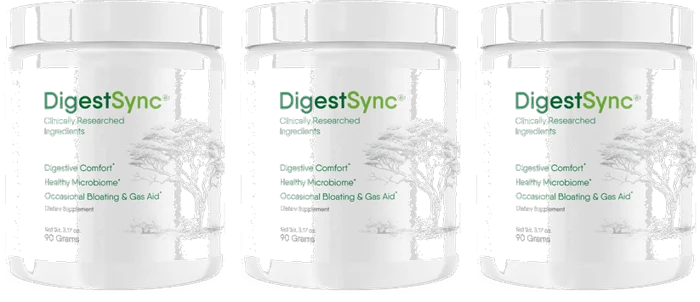
Digestsync costs $69 for one jar, $177 for three and $294 for six, checked October 19, 2026. Every package ships free in the US, in 5 to 7 working days.[4] It is a one-time payment with no autoship.[2]
| Package | Per jar | Total | Per day | US shipping |
|---|---|---|---|---|
| 1 jar | $69 | $69 | $2.30 | Free |
| 3 jars | $59 | $177 | $1.97 | Free |
| 6 jars (adds two e-books) | $49 | $294 | $1.63 | Free |
Prices checked October 19, 2026. International shipping is $15.95.[4] The vendor shows "was" prices of $297 and $594, which we could not confirm as real past prices. After checkout you may see upsells for more jars at $29 or $37 each. Decline any you did not plan for.
Coupon codes and sale claims are covered in our Digestsync price and coupon check.
What is the Digestsync refund policy?
Digestsync has a 60-day refund window counted from the day your package arrives.[3] The steps:
- Email contact@digestsync-product.com with "Refund Request" in the subject.
- Mail all jars back, empty or not, with the packing slip to 11870 62nd St N, Largo, FL 33773.
- Wait 5 to 10 days for the refund to show.
You pay the return postage. That clashes with the sales page promise to "refund every single cent". The vendor also says to use it "for at least 3 months", which runs past the 60-day window.[3] BuyGoods order support (buygoods.com/orderlookup) also handles orders.
Where can you buy Digestsync?
You can buy Digestsync through the vendor's BuyGoods checkout. The vendor says "We do not sell on Amazon or any other website".[2] A jar from Amazon, Walmart or eBay would come from a third party, outside the vendor's 60-day refund, with no way to confirm it is the same label. A copycat page already shows a different ingredient list and an FDA badge, so compare any jar against the vendor label before use. We list the risks in our Digestsync Amazon and Walmart check, and the order steps in how to order Digestsync.
Is Digestsync legit?
Digestsync is a real product sold through a known retailer, BuyGoods, with a printed label, a street address in Largo, Florida, and written refund terms.[3] The domain was registered on February 8, 2024. Against that, the doses are hidden, Sukre is unexplained, and the FAQ describes the facility as approved by the FDA while the label says FDA registered. The FDA does not approve supplement facilities.[2] No phone number is listed. The full seller check is in our Is Digestsync legit page.
Digestsync vs other approaches to gut health
Digestsync is one fiber-style option among several. Food fiber and a doctor visit have stronger footing for most people. This table sets out the general picture; it is not medical advice.
| Approach | Strength | Limitation |
|---|---|---|
| Fiber from food (beans, oats, fruit, vegetables) | Known amounts, cheap, adds other nutrients | Takes diet change; gas at first |
| Single-ingredient fiber powder | Dose printed on the label | Same gas and bloating risk |
| Fluids and daily movement | Free, simple | Modest effect alone |
| Doctor visit | Finds causes a powder cannot | Cost and time |
| Digestsync | One scoop a day, refund window | Hidden doses, no product study |
How we weigh products like this is explained in how TonicNest checks supplements.
How do you take Digestsync?
The label says to mix 1 scoop (3 g) in 8 to 16 oz of liquid, once a day.[1] The vendor FAQ adds that morning, before breakfast, is the time to take it.[2] Stir until fully mixed and drink it straight away, since konjac thickens in liquid. Order and delivery steps are in how to order Digestsync.
Digestsync: final take
Digestsync may suit a healthy adult who wants a once-a-day fiber-style drink, likes the free US shipping, and will use the 60-day refund if it does nothing. Skip it if you are pregnant, nursing, under 18, managing a medical condition, or on diabetes medicines without a doctor's go-ahead. Skip it too if you bought in for the vagus nerve or weight-loss story, because no study of the product supports either.
The biggest gap is the hidden doses. A single-ingredient fiber with its amount printed tells you more for less money. If you still want to try it, buy one jar first.
Frequently asked questions
What is in a scoop of Digestsync?
One 3 g scoop holds a 2.4 g proprietary blend of pea starch, wildcrafted baobab, Sukre, konjac glucomannan and biogenic polyamines, plus silicon dioxide, natural flavors and stevia. The label prints no amount for any single ingredient, so the dose of each one is unknown.
What is Sukre in Digestsync?
Sukre is a brand name for purified L-arabinose, a sugar that slows how fast table sugar is absorbed. The Digestsync vendor never explains it. Trials used it mixed with table sugar, while Digestsync is taken in water before breakfast.
Can Digestsync help you lose weight?
No study of Digestsync tests weight loss. Its weight claims come from vendor testimonials. Konjac glucomannan, its best-studied ingredient, showed no significant weight change across 8 trials, and the jar does not print how much konjac a scoop holds.
Does Digestsync have anything to do with the vagus nerve?
The vagus nerve link is a vendor sales claim. The label lists fibers, starches, a sugar blocker and polyamines, and none is tied to the vagus nerve in the studies we read. No trial of the product tests a nerve effect.
Is Digestsync sold on Amazon?
The vendor says Digestsync is not sold on Amazon or any other website, only through its BuyGoods checkout. A jar from a third-party seller would fall outside the 60-day refund and could carry a different label from the one the vendor shows.
Is Digestsync a subscription?
No. The vendor FAQ says every Digestsync package is a one-time payment with no autoship. After checkout you may see upsell offers for extra jars at $29 or $37 each, which you can decline if you did not plan to buy more.
How long does Digestsync shipping take?
US orders ship free on every Digestsync package and take 5 to 7 working days, per the vendor shipping table checked October 19, 2026. International orders cost $15.95 to ship. The 60-day refund window starts from the day the package arrives.
Can kids or pregnant women take Digestsync?
The Digestsync label tells anyone under 18, pregnant or nursing women, and anyone with a medical condition to ask a doctor first. The vendor FAQ says it is designed for all ages and conditions, which contradicts the label. Follow the label.
Who makes Digestsync?
The label says Digestsync is assembled in the USA and distributed for DigestSync, 11870 62nd St N, Largo, FL 33773. BuyGoods processes orders. The only product contact listed is contact@digestsync-product.com, and no phone number is given.
Sources
- DigestSync product page and label image. DigestSync, read October 19, 2026.
- Contact us and FAQ. DigestSync, read October 19, 2026.
- Refund policy. DigestSync, read October 19, 2026.
- Shipping policy. DigestSync, read October 19, 2026.
- BBB search for DigestSync. Better Business Bureau, read October 19, 2026.
- openFDA food enforcement search for DigestSync. US Food and Drug Administration, read October 19, 2026.
- openFDA CAERS adverse event search for DigestSync. US Food and Drug Administration, read October 19, 2026.
- Glucomannan and weight loss: meta-analysis of randomized trials. PubMed, read October 19, 2026.
- Konjac glucomannan and LDL cholesterol: meta-analysis. PubMed, read October 19, 2026.
- Glucomannan for constipation in children: randomized trial. PubMed, read October 19, 2026.
- Baobab fruit and satiety: acute human study. PubMed, read October 19, 2026.
- L-arabinose and the glycemic response to sucrose. PubMed, read October 19, 2026.
- Spermidine supplementation for 12 months: randomized trial. PubMed, read October 19, 2026.
- Resistant starch and blood lipids: meta-analysis. PubMed, read October 19, 2026.
- Esophageal obstruction from glucomannan tablets: case report. PubMed, read October 19, 2026.
This page is general information, not medical advice. Dietary supplements are not reviewed by the FDA for safety or effectiveness before they are sold and are not intended to diagnose, treat, cure or prevent any disease. Talk to your doctor before taking any supplement, especially if you are pregnant, nursing, take medication or have a health condition.